



World-First Doctoral Research Breakthrough
AI & IoT Technology in Action
Mastering Fire Response with Dynamic Evacuation

Like a Lifebelt — forgotten until the emergency. Most only notice the flaws after the fire starts.
From outdated to outstanding. We’re redefining fire safety with technologies built for tomorrow — giving you the time, control, and protection you need when it matters most.





According to the HKFSD, 78% of fire alarms are false. Traditional systems are easily triggered by steam, smoke from cooking, or other non-fire elements.

Conventional evacuation relies on human instinct, which often fails to lead people to the safest route—putting them in greater danger.

Traditional systems make it hard for property managers to pinpoint the fire's location. They must manually check each suspected area, wasting precious time for rescue.
According to the HKFSD, 78% of fire alarms are false. Traditional systems are easily triggered by steam, smoke from cooking, or other non-fire elements.
Conventional evacuation relies on human instinct, which often fails to lead people to the safest route—putting them in greater danger.
Traditional systems make it hard for property managers to pinpoint the fire's location. They must manually check each suspected area, wasting precious time for rescue.





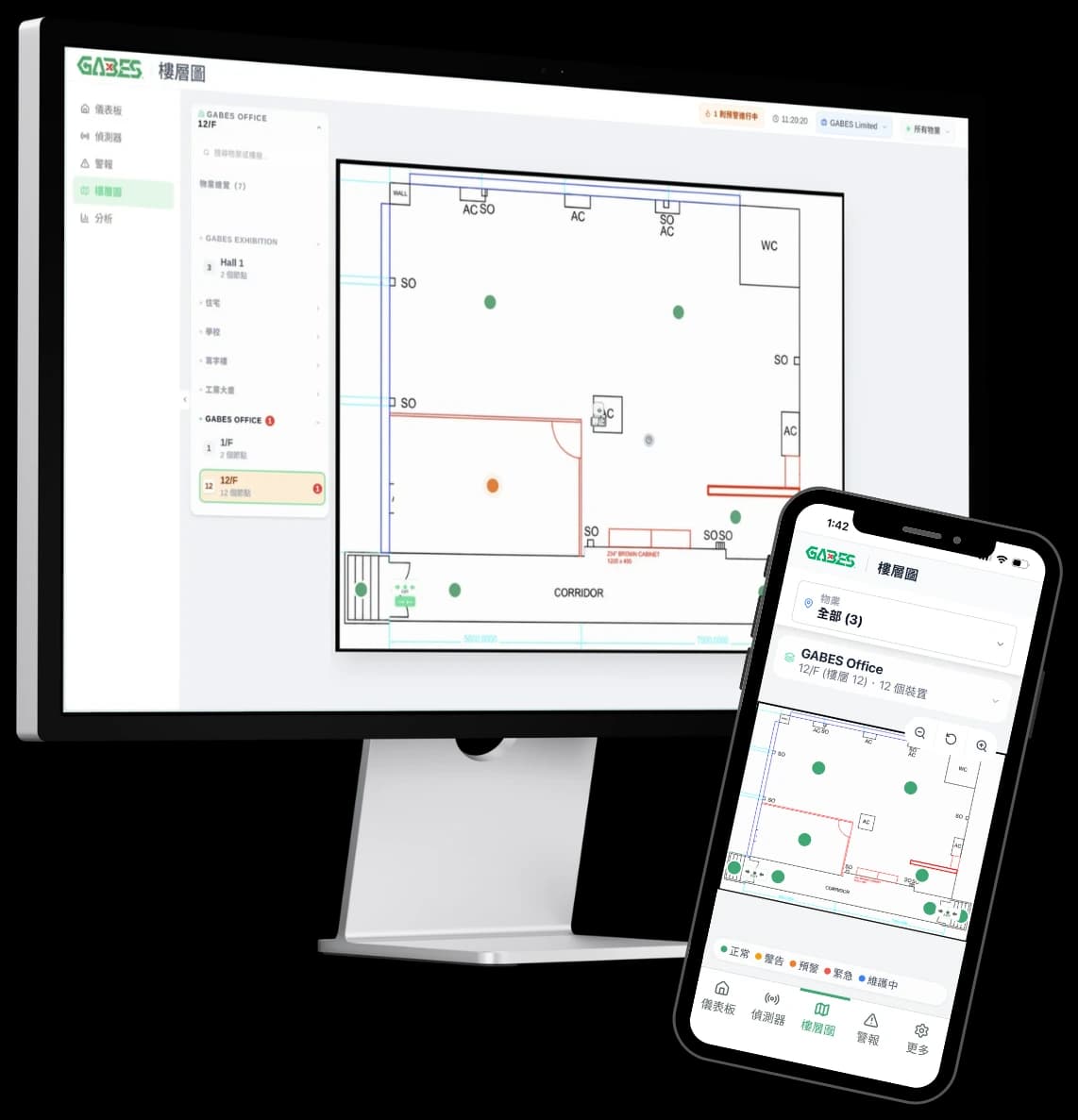


Reduce false alarms, ensuring uninterrupted daily operations
Fast wireless installation with minimal renovation needed
Unified dashboard for device management across buildings
Scheduled auto-checks assist with equipment maintenance













By the time you opened this page, the golden 300 seconds escape window has already lost by
If fire systems fail to operate, your chance of survival* may remained by
*Based on fatality rates from smoke-filled corridors on the fire floor. Smoke Alarm Information Page from NFPA. https://www.researchgate.net/publication/328577312_The_use_of_consequence_analysis_tools_in_fire-safety_design_of_Nile-floating_hotels